Dropping Out of College
The System
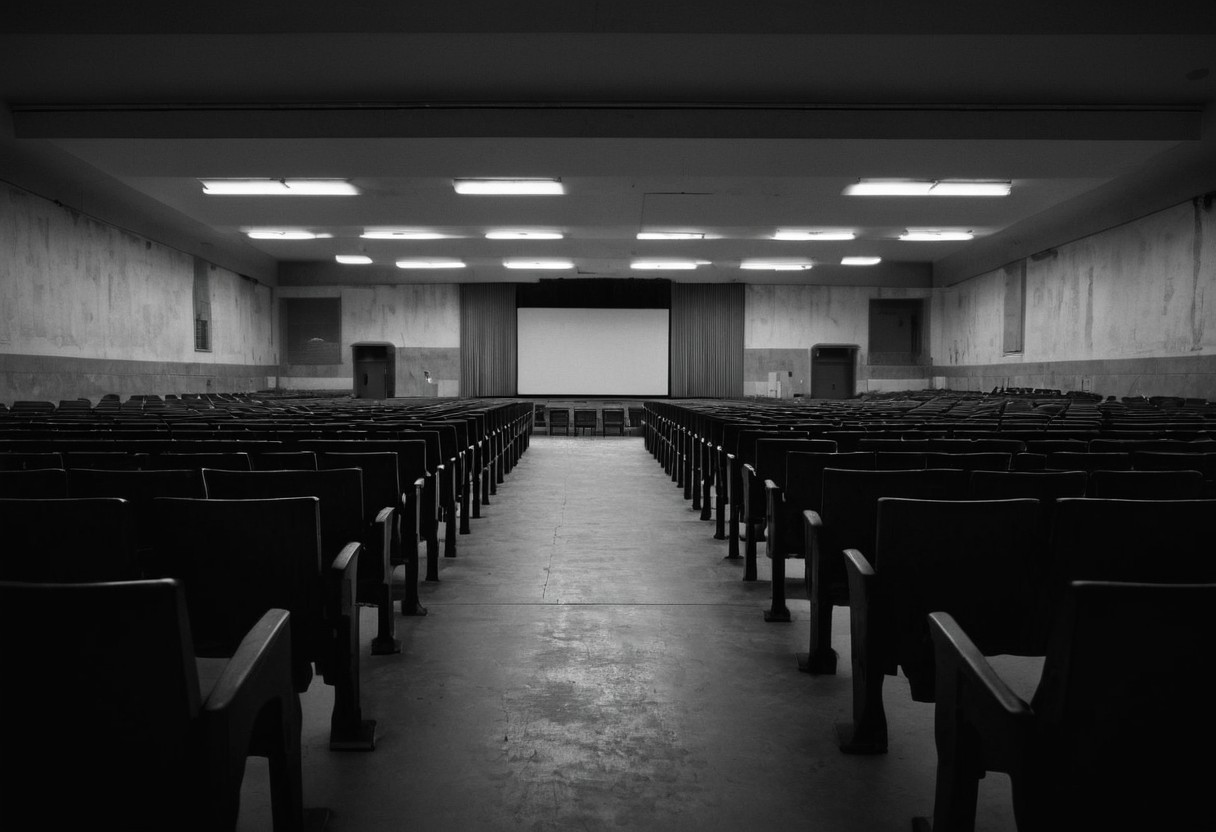
The University was once a place of retreat for the contemplative class. Today, it is a holding pen for the workforce. It is a financial instrument designed to extract future earnings from young people before they have earned a single dollar. It promises three things: 1) Essential skills for the modern economy, 2) A network of peers that will ensure your safety, and 3) A signal to the market that you are compliant and competent.
In all three, the promise has degraded while the cost has exploded.
You are paying a mortgage-sized sum for a product that is increasingly abundant (information) and a signal that is increasingly noisy (the degree). The system relies on your belief that there is no other path. It relies on the "College Premium" statistic—a historical artifact that conflates correlation with causation.
The system extracts:
- Your prime energetic years (18-22).
- Your future financial optionality (via debt).
- Your intellectual curiosity (replacing it with grade-seeking compliance).
The Breaking Point
For Case 142 (Architecture major, junior year), the breaking point was subtle. It wasn't failing a class. It was passing one. He spent three weeks building a model for a "sustainable urban hub" that he knew, mechanically, could never stand up. He got an A because the rendering was pretty. He realized he was not learning how to build; he was learning how to sell lies to developers. He looked at the tuition bill ($28,000/semester) and calculated that he was paying $1,200 per week to be taught specifically how to ignore physics.
For Case 089 (Liberal Arts, freshman), it was the realization that the "discussion" in her seminars was not a discussion at all, but a competitive performance of vocabulary she didn't fundamentally understand. She felt her mind narrowing, not expanding. She was learning to be afraid of saying the wrong thing, rather than eager to find the true thing.
The breaking point comes when the "Investment Narrative" collapses. You look at the seniors graduating ahead of you. Are they powerful? Are they free? Or are they panicked, taking unpaid internships, and moving back home? If the factory is producing broken units, why are you still on the assembly line?

Common False Exits
When the urge to leave hits, the immune system of strict socialization kicks in. You will feel panic. You will try to "fix" the feeling without leaving the structure.
The Major Switch: "Maybe I don't hate college; maybe I just hate 'Biology'. I'll switch to 'Psychology'." This is usually a delay tactic. It resets the clock, adds a year of tuition, and rarely solves the core misalignment. If the structure of the university itself is the problem, changing rooms on the Titanic doesn't help.
The Gap Year (Approved): A structured, expensive "experience" abroad that is just university with better scenery. If you are paying a program to "find yourself," you are still a customer. You are not dropping out; you are on a field trip.
The "Soft" Dropout (Fading Away): You stop going to class but remain enrolled. You fail out. This is a disaster. It leaves you with the debt, a transcript of Fs, and a damaged sense of self-efficacy. Do not drift out. Walk out.
The Reversible Exit Strategy
The University has a built-in escape hatch they do not advertise, but they must honor: The Leave of Absence.
This is your primary tactical tool. It converts a "Drop Out" (permanent, scary, binary) into a "Pause" (temporary, responsible, reversible).
Step 1: The Financial Audit. Before you speak to anyone, know your numbers. How much debt do you have right now? What are the terms? If you leave today, what do you owe? Ignorance here is what keeps you trapped.
Step 2: The Leave of Absence Request. Go to the Dean of Students. Do not say "I am quitting." Say: "I am facing a personal health/financial situation that requires my full attention. I need to file for a structured Leave of Absence for one year." Almost every university allows this. It freezes your status. It keeps the door open. It pacifies your parents ("I'm just taking a year to work").
Step 3: The Pilot Program. You now have 12 months. This is not a vacation. This is a combat deployment to the real world. You must construct a curriculum that is cheaper and faster than the one you left.
- The Skill Sprint: Spend 3 months intensely learning a hard skill (coding, welding, sales, design) via cheap, direct methods (online courses, apprenticeships).
- The Service Industry Tour: Get a job. Any job. Wait tables. Dig holes. Experience the immediate exchange of labor for money without the abstraction of grades. It grounds you.
- The Project: Build one thing that exists in the real world. A website. A small business. A zine. A garden. Something that proves to you that you can affect reality without permission.
Step 4: The Decision. At month 10, look at your life. Look at your bank account. Look at your mental state. If you are miserable and broke, the door to college is still open. You can go back. No harm done. But 90% of people who execute this step properly never go back. They find that the "fear of the outside" was the only thing keeping them inside.
Life After
You will lose the "Safety of the Herd." You will no longer have a simple answer to "What do you do?" or "Where do you go?" You will have to explain yourself at Thanksgiving dinners. You will see fear in your parents' eyes.
But you will gain the ultimate asset: The realization that there is no Principal's Office.
In the real world, nobody cares about your GPA. They care about what you can do. The "Dropout" stigma is fading rapidly. In tech, creative fields, and trades, a degree is increasingly seen as a "nice to have," not a "must have." The people who matter will respect the agency it took to leave. The people who judge you are usually the ones secretly wishing they had left too.
You will be "uneducated" by their standards, but you will be the only one in the room who knows how to educate themselves.
Losses and Gains
LOSSES
- The structural path (The "Conveyor Belt")
- Easy social approval
- Access to university gyms/parties
- The illusion of certainty
GAINS
- Financial solvency (stopping the bleed)
- Real-world competence
- Mental silence (exit from the grade rat-race)
- Years of your life back
Self-Location Prompt
Ask yourself: If tuition were free, but you received no degree/credential at the end—just the knowledge—would you still be here? If the answer is no, you are not here for education. You are here for the stamp. Is the stamp worth $100,000?